(edited February 1, 2025) At the beginning of yoga class last week, one of the instructors commented,” You -or we- need to keep you from becoming an old man…” I think she meant to encourage me, but there was a tinge of “…or else”, a looming threat for me to consider: If I become complacent, careless or lazy, entropy will send me tumbling the way of Humpty-Dumpty, never to be put together again.
Her words ring true. So in true yogic fashion, over the past several days I have been searching for an “opposite” thought, a mantra that conveys success, that slows down father time and preserves my health, or perhaps even improves a bit.
After a while, my mind settled on “Staying Afloat”. Floating, not sinking. Staying, not sliding downhill. Steadfast, not anxious.
But what could I do in the bleak New England winter to turn this thought into practice? In winters past, skiing and ice hockey have been my go-to cold weather recreation, but they probably are too ambitious now. Besides, I am looking for something convenient… something neither intense nor terribly dangerous. So I have taken up recreational skating again.
There’s a rink less than 30 minutes drive from home with a few public skating hours around noon, so I decided to give it the old college try. I have skated there on four separate days, and while I can feel that my legs aren’t in terrific shape, I am able to cruise around at a steady pace for about an hour.
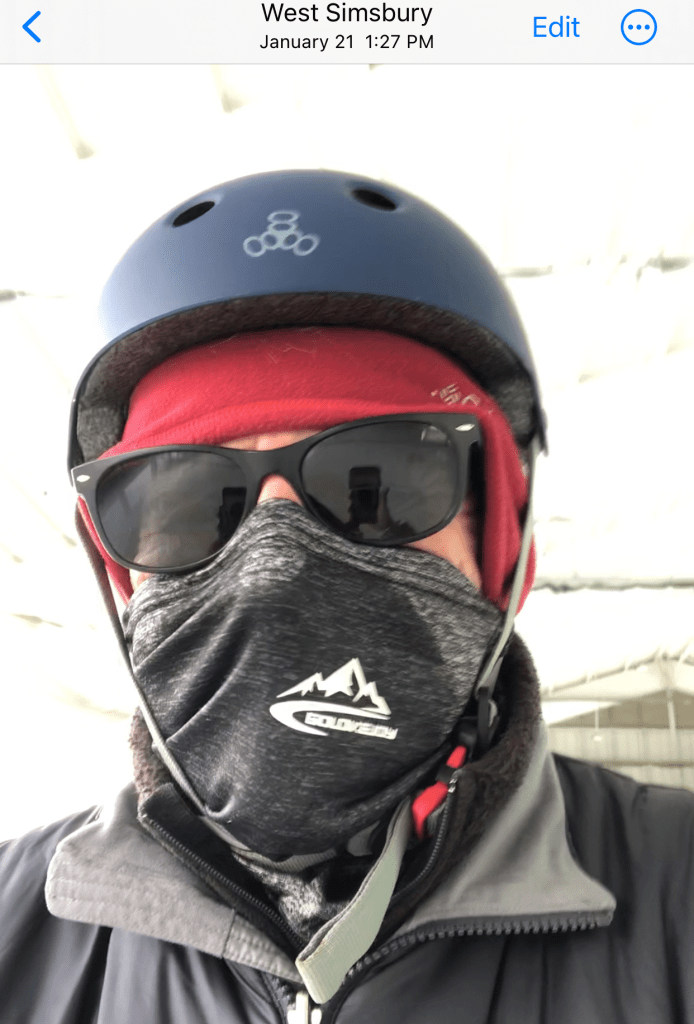
Being back on the ice is a simply fantastic feeling. I can just glide along, let my thoughts wander, leave any troubles behind and sink into a “flow” state. One day last week it was very cold and windy, and I had the rink to myself. I took out my phone and captured one lap, or about 30 seconds of video (link below).
The rink’s website says eleven laps of the rink equal 1 mile. At just under 30 seconds per lap, that’s 2/11 = 0.182 miles per minute, or about 10.9 miles per hour. That seemed pretty good for an old guy who skated just a few times in the past three years, and not for a long time before that, probably 25 years, since we left Vermont.
https://www.instagram.com/reel/DFgUT-kSZrw/?utm_source=ig_web_copy_link&igsh=MzRlODBiNWFlZA==
After playing around with these numbers, I came up with some startling results. Skating at this pace, I asked, “How long would it take me to go 26.2 miles, or to complete one marathon?” The answer: 2 hours and 24 minutes. That means that elite marathon runners (26.2 miles in just over 2 hours) are running faster over ground than I am skating for more than two hours in a row!!
The current marathon world record holder has a stride length of 1.96 meters = 6.4 feet. My walking stride length is about 23 inches, or 0.58 meters = 1.9 feet. At cruising speed it takes about thirty strides to go around the rink once, or approximately 15 feet per stride, which to my surprise also corresponds fairly well to the step count recorded by my phone.
What about professional speed skaters? The world record in the 10,000 meter race is 12:25.70, just under 12 and a half minutes to travel 6.2 miles, with an average speed of 29.8 mph! That’s almost three times faster than I’m skating. Yow! once around the rink in 10 seconds? …not gonna happen…
But this little arithmetic puzzle gives me a new and much deeper appreciation for the skill and athletic ability of elite athletes.


 anoutdooreducation